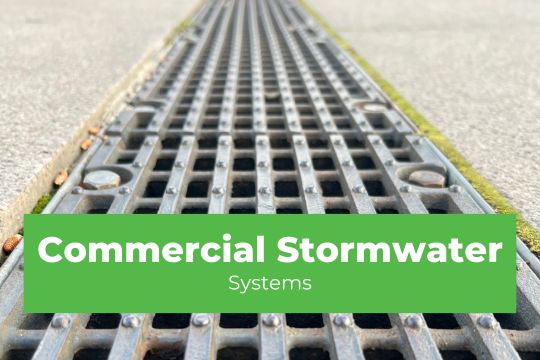


A commercial stormwater system may seem to drain normally during the dry summer months, but that does not always show how well it will handle sustained fall rainfall. With less runoff moving through the system, partial blockages and other restrictions may be harder to notice.
So, how can commercial properties prevent stormwater drainage problems before rainy season? Start by reviewing your most recent stormwater inspection report for recommended maintenance, blocked pipes, root intrusion, or other potential drainage concerns. CatchAll's complimentary inspections help property managers identify these issues, understand how their stormwater structures are connected, and plan cleaning or repairs before heavy rainfall puts additional strain on the system.
The key is to look beyond individual catch basins. A commercial stormwater system is a connected network, and the place where water begins backing up may not be where the actual problem is located.
Why Can Dry Weather Hide Drainage Problems?
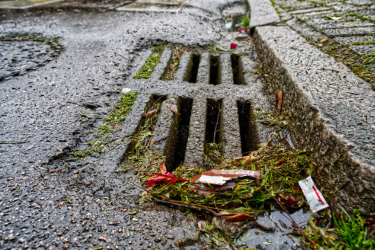
During dry periods, less rainwater flows through the stormwater system for extended periods. As a result, a partially obstructed pipe or slow-draining structure may still appear to function properly when only small amounts of water are moving through it.
This can happen in different parts of the system, including catch basins, conveyance pipes, vaults, and ponds. The problem may only become noticeable once heavier or more consistent rainfall sends more water through the system. At that point, a restriction can show up as slow drainage, standing water, backups, or localized flooding.
For example, sediment can build up inside a conveyance pipe and leave less room for water to flow. The pipe may still handle smaller amounts of water during dry periods, but drainage can slow when more runoff enters the system.
That does not mean every partial restriction will cause flooding, but it does mean that summer performance alone paints an incomplete picture of how the system will respond under wetter conditions.
Identifying concerns while conditions are still relatively dry gives property and facility teams more time to investigate the cause and complete any needed stormwater drainage maintenance before the system faces regular wet-season demand.
Review the Most Recent Stormwater Inspection
Before scheduling new work, start with information you already have by reviewing the property's latest commercial stormwater inspection, maintenance records, and previous recommendations. As you go through them, pay attention to findings that could indicate restricted drainage and note any maintenance that is yet to be completed.
What to Look for in Your Latest Inspection
- Blocked conveyance lines: Look for sediment, debris, or other obstructions in conveyance pipes, which carry stormwater between structures. A blockage in one of these pipes can restrict the flow of water through that part of the system.
- Root intrusion: Check whether roots have been found inside underground stormwater pipes, where they can restrict water flow. If the same line has had recurring problems, it may need a closer look.
- Slow-draining structures: Pay attention to catch basins, vaults, or other structures that were noted as draining more slowly than expected. The problem could be within that structure or somewhere farther downstream.
- Recurring backups: Note locations where standing water, backups, or inconsistent drainage have happened before. If the same area keeps having problems, the cause may extend beyond the structure where the water is visible.
- Deferred maintenance: Check whether previously recommended cleaning, repairs, or other maintenance remain incomplete. A lack of obvious problems during dry weather does not mean the restriction has cleared.
These findings can help you narrow down where to look, but the problem may not be coming from the catch basin where you first notice it.
Why Can a Downstream Problem Cause an Upstream Backup?
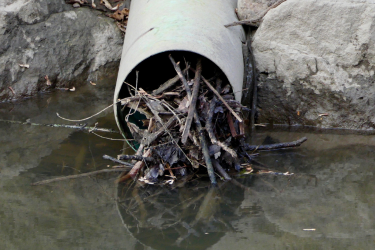
Water entering a catch basin still needs somewhere to go. From there, water moves through one or more conveyance pipes and may pass through downstream treatment, detention, or flow-control components before continuing through the system or reaching a discharge point. The exact path depends on the property’s stormwater system, but what happens downstream can affect how well upstream components drain.
A simplified drainage path might look like this:
- Surface runoff enters an upstream catch basin or inlet.
- Water moves into a conveyance pipe.
- The water continues toward downstream structures or another part of the system.
- Those components manage, treat, store, control, or convey the water according to the site's design.
- Water eventually continues to the next part of the system or its designated discharge point.
If part of that downstream path becomes restricted, water may not move through the upstream portion as efficiently.
How a Drainage Restriction Moves Upstream
Water may enter an upstream catch basin without any obvious problem, but it still has to flow out of the basin and through the pipes that follow. If sediment has built up in the outlet pipe, the water has less room to pass through. The outlet pipe may also be completely clear while debris or roots are blocking another pipe farther downstream.
A similar problem can happen when a filter vault, detention structure, pond outlet, or control structure farther downstream slows the flow of water. As more runoff enters the system, water may reach the upstream structures faster than it can get past the restriction. As a result, water may remain in upstream structures longer or begin backing up toward them, creating slow drainage, standing water, or catch basin backups.
The visible problem does not always show you where the actual restriction is. That is why repeatedly cleaning the catch basin where water appears may not solve the drainage problem if the restriction is farther downstream. You may need to look farther through the system to find what is actually slowing the water down.
Which Downstream Components Can Restrict Drainage?
The restriction may also be somewhere beyond the pipes. Depending on how the property’s stormwater system is designed, filter vaults, detention systems, ponds, and other downstream components can affect how well water moves through the system.
Filter Vaults
Filter vaults help treat stormwater as it passes through certain systems. Over time, sediment and debris can build up and make it harder for water to pass through the vault. When that happens, water can drain more slowly in other parts of the property’s stormwater system. The type of cleaning or maintenance needed will depend on the vault and what is causing the problem.
Detention Systems
Detention systems temporarily store stormwater and control how quickly it is released. Drainage can slow when sediment builds up or when outlets, control structures, or connecting pipes become blocked. If one of these areas restricts drainage beyond what the system was designed to control, the effects can reach other parts of the system upstream.
Some detention systems use underground vaults, which can make drainage problems harder to spot from the surface.
Stormwater Ponds
A stormwater pond can also be part of the connected drainage system. The role of a stormwater pond depends on the property’s system design, which determines whether it functions as a detention pond, retention pond, or another type of stormwater facility.
Sediment, debris, or overgrown vegetation can make it harder for water to move through a pond or its outlet. When water cannot leave the pond as easily, drainage can slow in other parts of the stormwater system.
The same principle applies across all three examples: the condition of a downstream component can influence how efficiently water moves through the structures before it.
Address Drainage Problems Before the Rainy Season
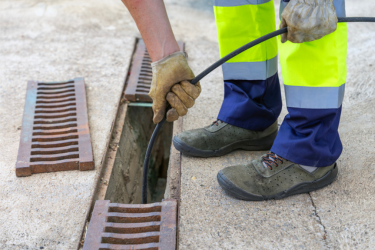
Cleaning a catch basin may help in some cases, but it will not fix every blockage or other problems farther downstream. The maintenance you need will depend on where the restriction is and what is causing it.
Match the Maintenance to the Restriction
- Sediment or debris blockage: If sediment or debris is restricting a stormwater pipe, cleaning or pipe jetting can help clear the blockage. Pipe jetting uses pressurized water to remove sediment, debris, roots, and other material from inside stormwater pipes.
- Root intrusion: When roots grow into an underground stormwater line, removing them can clear more space for water to flow. If the inspection also finds damage to the pipe, the pipe itself may need further inspection or repair.
- Blocked conveyance line: Cleaning needs to reach the part of the system where the blockage is located. If it is farther downstream, cleaning the nearest catch basin will not clear the actual problem.
- Uncertain underground obstruction: When the cause cannot be confirmed from the surface, a video pipe inspection can show what is happening inside the line and help determine what needs to be cleaned or repaired.
- Restricted downstream structure: Filter vaults, detention structures, ponds, control structures, or other confirmed components may require cleaning or maintenance if they are interfering with drainage.
- Structural damage: Jetting is a cleaning method, not a structural repair. If the pipe is cracked, separated, or collapsed, it may need to be repaired or replaced.
Finding and fixing these problems early can help keep them from turning into bigger issues once the rainy season begins. Taking care of blocked pipes and other drainage problems before the rainy season can also be part of broader proactive flood prevention strategies for commercial properties.
Warning Signs You Should Not Ignore Before Fall
Inspection records can tell you a lot about the condition of your stormwater system, but what you notice around the property can also point to areas that need a closer look.
Watch out for:
- Repeated blockages in the same location.
- Recurring standing water around drainage structures.
- Catch basins that drain noticeably slowly after water enters.
- Water backing up into upstream catch basins or other structures.
- Root intrusion or blocked pipes noted during an inspection.
- Unusual water levels in ponds or vaults that may need a closer look.
- Previously recommended maintenance that has not been completed.
Any of these signs are worth looking into, even when the cause is not obvious from where the problem shows up. The next step should be to trace the problem through the system to find what is actually causing the drainage issue before deciding what maintenance is needed.
Prepare the Stormwater System Before Wet Conditions Set In
Dry weather can make a restricted stormwater system appear to be working better than it will under sustained rainfall. Reviewing inspection findings before fall gives property teams more time to take care of blocked lines, root intrusion, slow drainage, recurring backups, and any unfinished maintenance.
For properties that need cleaning or further evaluation of potential drainage problems, CatchAll Environmental provides commercial stormwater management services that include catch basin cleaning, pipe jetting, stormwater vault maintenance, pond maintenance, and video pipe inspections.