

.png)
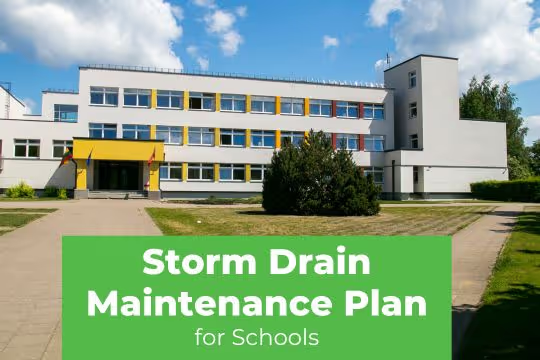
Districts often set aside a budget for school facility drainage inspections, repairs, and overall maintenance. Typically, district size and the specific on-site drainage infrastructure determine the amount. Unless there is a plan for a general stormwater management system infrastructure upgrade, campuses do very well with an annual storm drain maintenance plan for school facilities. What does this look like? And, if you are in charge of developing or following up on a maintenance plan, what do you need to know today? Your questions – answered!
It is Easy to Gauge Stormwater System Effectiveness at Schools Within 24 Hours after a Storm With Heavy Rain
You will encounter several challenges when developing, updating, or revising an annual storm drain maintenance plan for school facilities during bone-dry weather. But nothing makes the need for comprehensive stormwater system maintenance plan updates clearer than the aftermath of a storm. The storm exposes drainage issues and underscores the urgency of addressing them now.
Follow a Common Sense Post-Drainage Inspection Checklist
Which elements of the school's drainage are working well? Which are not? Start with an inspection of paved areas, such as the parking lot. What do you see? Or, perhaps more importantly, what do you not see?
- Oil sheen. An oil sheen on the wet pavement is a warning that vehicle-generated pollutants are likely washing into the drains. Besides oil, there may be brake fluid and even fuel. Is your stormwater system infrastructure designed to deal with these types of pollutants?
- Standing water. The occasional puddle is normal. However, seeing standing water after a full 24 hours has passed could be a sign of problems. Here, you may have a problem with blocked storm lines. Sediment and trash are the most common culprits. Does your maintenance plan emphasize routine drain cleanings? Evaluating the post-storm condition, is the current maintenance plan for routine cleanings really working for your campus?
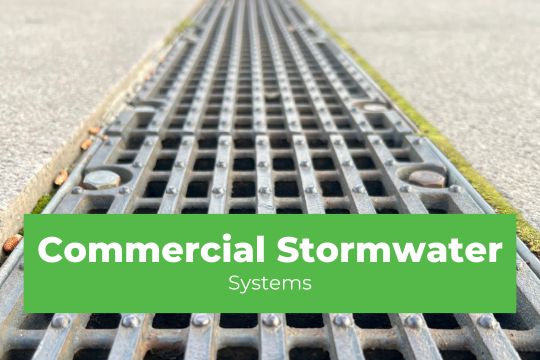
- Overflow. Stormwater travels through grates into pipes that may then lead it to catch basins and similar infrastructure. When you see missing, broken, or clogged grates, there is a good chance that trash and sediment have easy access to the pipes, where they may then create clogs. In the parking lot, you will see it as standing water around grates or active overflow. A camera inspection of the pipes can tell you what you are dealing with. This level of inspection can be scheduled regularly.
If your campus has an athletic field, look for ground saturation exceeding 48 hours. Turf damage, erosion, and muddy spots may be signs that outlets are clogged with grass or soil. Check the grates covering the storm drains to check for clogging. There are often storm drains around the sports fields that may need cleaning!
Familiarize Yourself With Drainage Systems and Develop an Inspection Schedule

The school district should have a stormwater management infrastructure map for each of its facilities on file. A successful school district stormwater management program prevents flooding, protects infrastructure, and prevents pollutants from entering lakes and nearby streams. Compare the drainage infrastructure with the goals of preventing stormwater problems. When the infrastructure does not fulfill its role, check the storm drain cleaning and stormwater infrastructure inspection schedule. This is typically where you find the cause of any disparity.
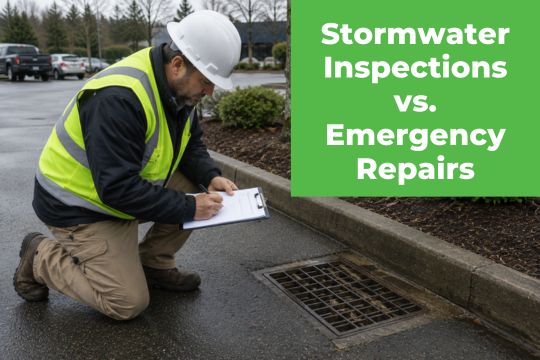
Ideally, the school's in-house maintenance team will conduct monthly visual inspections of grates, parking lot drains, and athletic field outlets. These staff members should remove leaves and trash. If they notice damaged or missing grates, you need to know about it. Develop a process that provides the maintenance team with a checklist and schedule to follow, along with a standardized reporting format.
Quarterly preventive maintenance requires the assistance of trained technicians who have the hardware needed to detect out-of-sight problems and address them through effective cleaning and other steps. These teams may vacuum debris from catch basins, pipe-jet drain pipes, and remove sediment buildup. Keeping this quarterly appointment is particularly important if your campus is near construction sites, has large trees on the property, or uses an older drainage system that may have already undergone numerous repairs or is otherwise compromised.
Annual stormwater system assessments should be comprehensive. Ask technicians to provide video inspections of underground pipes to assess their overall condition. They should measure sediment depth in catch basins and evaluate the condition of detention basins. This in-depth assessment will allow the school district to remain in compliance. Additionally, the district can schedule needed maintenance and repairs before they become emergencies, thereby protecting its annual budget from unexpected expenditures.
Preventative Maintenance for School Drains as Part of an Annual Maintenance Plan
The annual storm drain maintenance plan for school facilities can be straightforward if you follow a customized inspection schedule and address any needed repairs as they are identified. Here is what this looks like.
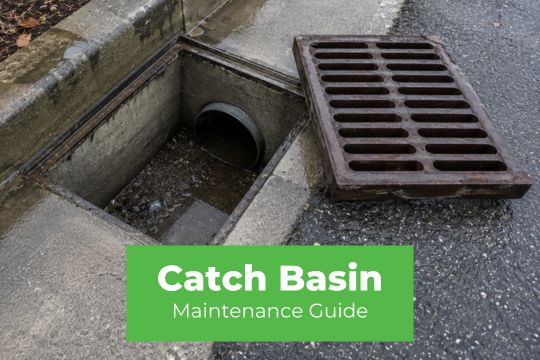
- Catch basin cleaning. Catch basins collect sediment and debris. Depending on the debris load your campus generates, this part of the stormwater management infrastructure may need to be cleaned more than once per year. Technicians will vacuum sediment from the catch basin, remove trash, check the grates, and inspect the pipes for blockages. Removing sediment helps maintain the system's capacity for holding stormwater.
- Pipe jetting. Technicians ensure that the underground pipes you rely on to transport water function properly. After an initial camera inspection, they will note blockages, breakdowns, and anything else that reduces the effectiveness of these pipes. High-pressure water jetting flushes blockages from pipes and reduces the risk of overflows. The frequency with which technicians will recommend this pipe cleaning depends on the makeup of clogs. Once again, if there is a lot of trash, you may have to clean the pipes more frequently.
The Benefits of Proactive Educational Facility Stormwater Infrastructure Maintenance
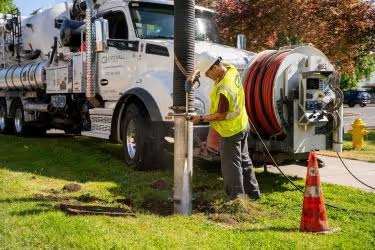
Catch-basin cleaning to facilitate effective parking-lot drainage is essential to prevent campus flooding. Besides that, it extends the life of the pavement. Remember that local weather conditions expose the lot to cycles of rain and freezing temperatures.
Cleaning storm drains before the rainy season reduces emergency maintenance calls and potential repairs. Emergency drain clearing on campuses is expensive and may strain the district's annual stormwater management budget. That said, proactive maintenance year-round is an ideal option.
The Problems the District Faces Because of Reactive Storm Drain Maintenance
When the stormwater infrastructure is working as intended, it will not be top of mind. However, the danger here is waiting until you notice a problem. At this point, emergency calls and repairs are expensive. However, if you focus on a proactive inspection and maintenance schedule, you can save the district significant money while ensuring a safe campus for students, parents, and administrators.
For example, clogged catch basins prevent water from draining off the property. You notice water pooling around the drain grates along with an unpleasant, rotting smell. Landscape debris, trash, and sediment accumulation are the likely culprits. However, if regularly scheduled vacuum cleanings and inspections are part of the maintenance plan, it is highly unlikely that you will have to deal with clogged basins. Conversely, reactive maintenance will result in costly emergency calls. Also, reactive maintenance may expose connecting infrastructure to stress and damage. Worst of all, reactive maintenance exposes students and visitors to hazards and the school district to liability.
Let's talk about the storm pipes. Depending on their age and overall condition, they may be at risk of blockage or overall collapse. Water backing up during storms, gurgling sounds near drains, and slow drainage are signs of developing or already present problems. Typical causes include sediment buildup, tree root damage, and pipe corrosion, which can result in collapse. Something as simple as shifting soil can affect pipe connections, reducing their flow capacity. Unless you work with technicians who regularly inspect the storm pipes and clear clogs, you will not know there is a problem. Once again, reactive inspections and maintenance are expensive and may lead to problems, allowing them to continue until pipe replacement is the only (expensive) option.
Proactive Maintenance for Your School District
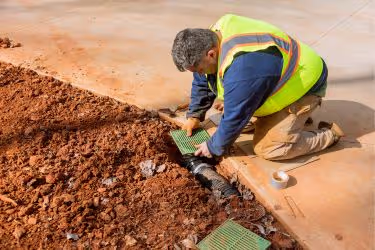
Proactive assessments and maintenance are a better option than responding reactively to problems as they arise. So, how do you get started being proactive? It is actually easier than you think. For the school district that has noted drainage problems after a recent rainfall, an overall stormwater system infrastructure assessment is an excellent source of data to inform next steps.
For a campus with no problems, an infrastructure assessment is also a good starting point. It will tell you which type of maintenance schedule would be well-suited. The inspection also highlights what you are doing well, which is just as important to know as what could be problematic.
After the assessment, it is time to schedule future inspections. Our team can discuss maintenance plan pricing for educational institutions with you or your district. Putting stormwater system management infrastructure inspections and maintenance on autopilot has never been easier. Make the call today!