

.png)
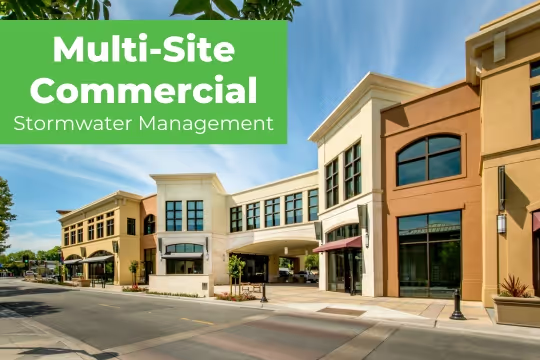
Which types of buildings are in your commercial real estate portfolio? Examples may include office buildings, retail centers, apartment buildings, and industrial warehouses. There are plenty of challenges associated with managing this type of portfolio. One tool that makes it easier is the standardization of policies and procedures. It is noteworthy that this understanding applies particularly to managing stormwater across multi-site commercial properties. What does this look like? How will it help you avoid liability and risk?
How Do You Standardize Stormwater Management Across Multiple Sites?

The move toward a standardized stormwater management approach relies on a functional and consistent system for infrastructure inspections, scheduled maintenance, documentation setup, and decision-making. It is somewhat complicated by the physical differences among the properties. However, it is possible to arrive at standards even when your portfolio is a mixed bag of property types.
Define and Establish a Uniform Stormwater Management Standard
Granted, an apartment building has different stormwater management challenges than a shopping center. That said, you nevertheless establish a company-wide approach to infrastructure inspection frequency and maintenance triggers. For example, establish a quarterly or annual inspection schedule and only deviate from it to conduct additional inspections if standing water is present or a maintenance team notices unusually high sediment levels in catch basins. You are most likely dealing with site managers at each location, which means that you need to streamline documentation requirements and response timelines when there is any flooding on commercial properties in your portfolio.
Draw up Stormwater Management Infrastructure Maps for Each Location
Even if you are dealing with dissimilar infrastructure, including predetermined elements in these maps makes managing stormwater across multi-site commercial properties easier. Include:
- Catch basins and their locations.
- Vaults, oil-water-separators, and outfalls.
- Conveyance pipe locations and connectors.
Develop Standardized Inspection and Maintenance Schedules
While you want to standardize as much as possible, you may have to allow some flexibility for site idiosyncrasies. Make allowances for the site's structural condition and areas where you notice ponding. That said, you will be able to standardize inspection schedules, acceptable sediment levels, what constitutes a sign of pipe blockages, and who takes the lead in diagnosing problems, enabling proactive management. Along with these, hands-on activities will include documenting inspection findings and preparing maintenance reports.
Dealing with Regulatory Exposure by Site Type

Each property in your portfolio has its unique regulatory exposure risks. These involve pollutant loads, runoff volume, and the proximity to lakes and rivers. Industrial sites deal with higher pollutant loads due to heavy truck traffic and outdoor material storage. Risks here include failures of oil-water separators and illicit pollutant discharges.
Portfolio managers should consider these types of properties as being very high risk. In contrast, retail centers only present a moderate risk. Here, you may be dealing with clogged catch basins, flooded parking lots due to pipe collapses, and poor post-storm documentation.
That said, whether your site is high risk or considered a moderate-to-low risk property, there are modifiers that apply to each facility you need to consider.
- The square footage of impervious surfaces.
- A history of regulatory defects and enforcement actions.
- Aging stormwater management infrastructure can lead to imminent failures.
Why Does Centralized Documentation Reduce Risk?
The portfolio manager will likely take control of inspection and maintenance data. While it is available at each site for compliance reasons, the data should also be collected in a centralized system. This is not something you want to piece together from site manager emails, spreadsheets, and copied documents. If you do this correctly, you will have real-time information across all sites, can track trends in recurring problem areas, and will not have to worry about retrieving data during inspections and regulatory reviews. Here is a framework that may well work for your portfolio.
Site Classification to Define a Baseline Inspection Frequency
Use comparable criteria across various locations to enable data comparison. For example, include classifications that include:
- Property type and use.
- Square footage of impervious areas.
- Risks posed by traffic and heavy loads.
- The age of the current stormwater management infrastructure.
Risk Prioritization Protects Sites in Greater Danger of Experiencing System Failures
You can also establish risk by reviewing the property's flood history. Check records for recurring maintenance issues and emergency repairs. Additionally, go through inspection documentation to learn about a site's developing defects. High-risk sites need your immediate attention to prevent system failures. Low-risk sites should continue with their inspection and maintenance efforts.
Inspection Standardization Allows for Result Comparisons Across all Sites
Regardless of location, standardized inspection procedures enable centralized reporting and documentation. Develop a checklist that covers all elements of the site's stormwater management infrastructure. Make photo documentation mandatory and develop threshold criteria that trigger immediate maintenance and repair activities. In the process, define a clear timeline for responses so that no property falls through the cracks. Doing so is particularly helpful with larger portfolios or those with vastly different properties.
Vendor Consolidation Keeps Reporting Consistent
Some portfolio holders work with different vendors. It can make it challenging to track expectations and communicate portfolio-wide service standards. Consolidation here refers to business relationships that specify consistent and comparable inspection methods and reporting templates. Photographic documentation should be comparable between vendors and sites. Vendors should also be on board with standardized inspection, maintenance, and repair schedules.
Not surprisingly, there are clear benefits to working with one stormwater vendor. If your portfolio sites are located in the same general area, it is advisable to use the same vendor for all properties. It creates consistency and allows for easy system maintenance coordination. Additionally, working with one vendor:
- Identifies problems identically across all property types.
- Allows for easy comparison of conditions across the portfolio.
- Presents you with a uniform inspection report and consistent photo documentation to support any maintenance or repair suggestions.
- Creates maintenance records that are easy to audit and defend if needed.
Additionally, having a single vendor oversee your portfolio's stormwater infrastructure needs eliminates redundant inspections and simplifies budgeting for repairs. Furthermore, it reduces the administrative overhead you have to invest in to keep the site functionality running. Fewer points of contact and invoicing minimize your office's time spent coordinating services and conferring on findings. You can now focus on other issues that may be more pressing.
A Conservative Reactive vs Proactive Cost Comparison
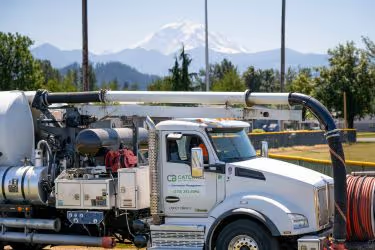
It is tempting to limit a reactive versus practice management practice to the timing of inspections or maintenance efforts. When managing stormwater across multi-site commercial properties, timing is only one factor. Also consider costs, risk exposure, and business disruption.
Taking a reactive stormwater management approach will incur costs for emergency calls, overtime labor, unplanned pavement removal and repaving, and ongoing system failures resulting from spot fixes rather than planned maintenance. You are probably looking at flooded parking lots that need to be shut down, collapsed pipes that require emergency excavation, and possible regulatory violations.
In contrast, the costs associated with proactive stormwater management typically focus on routine cleaning, maintenance, and repair appointments. Vendor pricing is predictable and easy to incorporate into your operational budget. A proactive approach allows you to restore drainage capacity before it leads to flooded parking lots or collapsed conveyance pipes. Regulatory exposure is minimal, and long-term costs are manageable.
Schedule a Portfolio Risk Assessment Consultation
Are you dealing with multi-site compliance reporting, regional maintenance planning, and portfolio-wide drainage maintenance? Do you know what risks are present in your property portfolio? Do you need to determine ways to minimize liability risk? Get it done today by scheduling a portfolio risk assessment consultation.