

.png)

The December 2025 Pacific Northwest floods are fresh in everyone's mind. Severe flooding in Western Washington destroyed homes, affected residents, and triggered evacuations. Weather analysts pointed to tropical moisture flooding and atmospheric rivers as underlying causes. News outlets reported an estimated $182 million in infrastructure damage.
Property managers learned how their stormwater systems and storm drains performed during a worst-case flood event. Now it is time to take stock, note what did not work, and follow a post storm storm drain inspection checklist for commercial properties to maintain what did.
What Should Facility Managers Inspect After Heavy Rain?
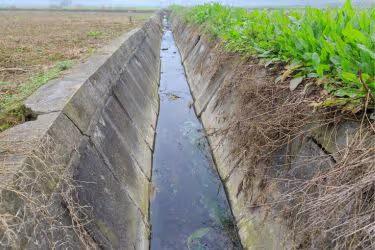
Right now, the primary goal is to catch water intrusion early, prevent structural damage, and reduce liability. Property managers and maintenance staff play a critical role in identifying water intrusion.
One of the most important structural elements to inspect is your stormwater drainage system, including storm drains, catch basins, pipes, and vaults. Some components are easy to visually inspect, while others are underground and may require professional inspection with specialized equipment.
Maintaining effective commercial building drainage ensures that stormwater systems can continue to redirect runoff away from structures and high-traffic areas. A post-storm storm drain inspection checklist for commercial properties helps ensure every drainage component is evaluated before small problems become costly failures.
How Do Storms Reduce Stormwater System Capacity?
Effective drainage systems collect, store, and redirect runoff to prevent property damage. When functioning properly, these systems absorb the impact of heavy rainfall and flooding events.
However, intense storms can damage storm drains and other stormwater infrastructure, reducing their ability to protect the property during future rainfall events. A post-storm storm drain inspection checklist for commercial properties helps facility managers and technicians identify issues early and restore the drainage system to full performance.

Debris Accumulation
High winds and heavy rains carry leaves, trash, branches, and soil into storm drains and other stormwater infrastructure. The buildup clogs catch basins, inlets, trench drains, culverts, and underground pipes.
If debris is left untreated, water can back up faster than the compromised drainage system can move it away from the property.
Sediment Overload
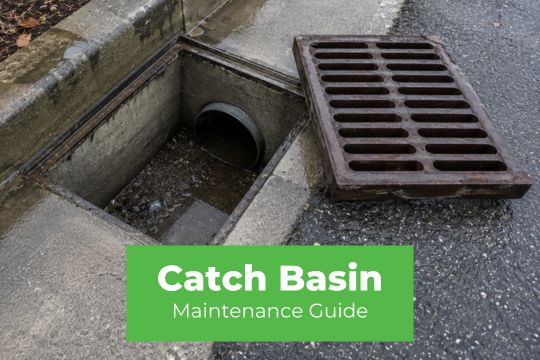
If your property uses catch basins as part of its stormwater infrastructure, it is important to inspect them for sediment buildup. Catch basins collect runoff and sediment before water enters downstream pipes.
Over time, heavier materials such as sand and gravel settle at the bottom of the basin. When sediment buildup becomes excessive, the basin loses storage capacity, increasing the risk of flooding.
This is why storm drain inspection checklists often include measuring sediment depth during post-storm inspections.
Slow Drainage and Pipe Movement
Debris accumulation and sediment buildup can contribute to obstructed or collapsed pipes.
Obstructions reduce the effective pipe diameter through which water can flow away from the property, increasing the likelihood of drainage backups during storms. Even minor pipe movement can create partial blockages, leading to standing water.
During an inspection, technicians look for crushed, shifted, or collapsed pipes. They pay close attention to conveyance pipes that transport runoff from storm drains and catch basins to vaults, ponds, or municipal drainage systems.
Stormwater Vaults Can Fail
Stormwater vaults perform several important functions depending on their design.
- Detention vaults store runoff and release it slowly
- Retention vaults hold water for reuse
- Infiltration vaults allow water to soak into the surrounding soil
Sediment accumulation and debris clogs can affect vault performance. Because these structures are typically underground, problems are often invisible without professional inspection.
A Comprehensive Post-Storm Inspection Checklist
How do you know your stormwater system has been compromised?
Look for warning signs such as:
- Standing water
- Erosion around inlets
- Sinkholes
- Overflowing grates
- Water bypassing storm drains
A post-storm storm drain inspection checklist for commercial properties helps facility managers detect these early warning signs and restore drainage performance quickly.
We have compiled a practical checklist that property managers can use after heavy rainfall.
Post-Storm Storm Drain Inspection Checklist
- Record any standing water on the property
- Look for sediment or debris deposits near storm drains and inlets
- Verify that the catch basin sediment does not exceed one-third of the sump depth
- Check for bubbles or soft soil above underground conveyance pipes
- Look for backflow around vaults or detention structures
These visual inspections should ideally be completed within 24 hours after heavy rainfall. If flooding or ponding occurs, inspections should begin immediately, even if rain is still falling.
How Stormwater Technicians Can Help After a Storm
Stormwater management technicians have specialized tools and training to evaluate drainage infrastructure. They can assess catch basins, conveyance pipes, vaults, and other elements of a property’s stormwater drainage system.
During a commercial property inspection, technicians may perform:
- Camera pipe inspections
- Flow monitoring
- Water-level measurements
If slow drainage is detected, technicians trace the issue to its root cause.
They document findings with photos, sediment measurements, and notes about structural damage. After evaluating the system, they can recommend repairs such as sediment removal, pipe jetting, or infrastructure restoration.
Even properties with routine maintenance programs may require additional service after a major storm event.
Documentation Protects Your Property From Compliance Risk

Stormwater regulations often require property owners to demonstrate that drainage infrastructure is inspected and maintained.
Inspection documentation helps show that your property met its maintenance obligations. After a flood event, this documentation can also support investigations and demonstrate that any system failure was unforeseeable.
Schedule a Post-Storm Stormwater System Inspection
CatchAll Environmental helps commercial property managers protect their buildings and meet stormwater compliance requirements.
Our team can perform post-storm storm drain inspections, stormwater system assessments, and drainage maintenance services to restore system performance after severe weather.
If your property experienced heavy rainfall or flooding, now is the time to schedule a post-storm capacity assessment and ensure your stormwater infrastructure is operating at full capacity.