

.png)
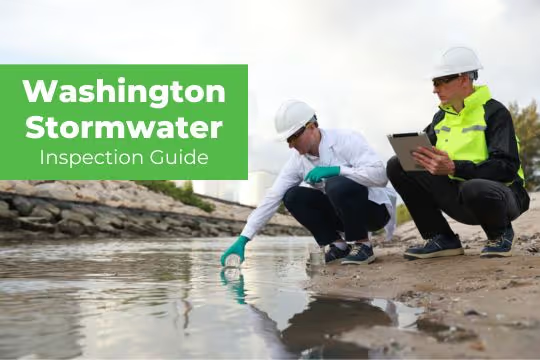
Let's talk about the Washington stormwater inspection requirements for property managers that come with summer seasons. It is a common misconception that a break in rainy weather can put your stormwater infrastructure on the back burner. That is not true. In fact, dry-season inspections are critical to the ongoing operation of your infrastructure.
Typical WA Stormwater Inspection Requirements in the Dry Season

Property maintenance is one of the most important property manager responsibilities . Part of this maintenance involves the stormwater system infrastructure. Additionally, remember that inspections are a critical aspect of your stormwater pollution prevention plan (SWPPP). When checking your permit, you will likely notice that you are required to do routine inspections, document your findings, and keep records on hand.
During the dry season, you have the added advantage of seeing the stormwater management system when it is temporarily inactive. Hidden problems are now much easier to see. Besides that, Washington stormwater inspection requirements for property managers in the summer allow for verifying the readiness of best management practices (BMPs). Also, if there are illicit pollution discharges somewhere on the property, it is now much easier to identify the source.
Here is What Inspectors Typically Look For
Inspectors favor a two-pronged approach when inspecting stormwater infrastructure during the summer months. For starters, they are looking at your documentation. The accuracy of your SWPPP and infrastructure map is critical. Also, you should have maintenance records, inspection logs, and any actions taken based on the findings.
The second element is the site walk. The inspector wants to walk across the property and note the various elements of your stormwater infrastructure. They will look for adequate storm drain connections, flow paths, discharge points, and possible signs of pollutants (e.g., oil sheen or chemical discoloration). When evaluating the infrastructure, the importance is placed on functionality and regular maintenance.
By the way, inspectors want to gauge your familiarity with the site and its stormwater management elements. Do you know where the catch basins are? Are you familiar with the outfalls? What is the current status of sediment depth in your catch basin?
The Four Most Common Issues Found During Summer Inspections
Four issues typically arise during a warm-weather inspection.
- Exposure problems. What exposes stormwater at your location to pollution? Examples include open dumpsters without fitted lids, leaking dumpsters, and chemicals stored without safeguards for accidental spills. If you store anything outside, make sure it is covered appropriately.
- Documentation problems. Which documentation is missing? Do you have proof that BMPs are implemented as stated? Are your inspection logs complete? Are your infrastructure map and SWPPP up to date?
- Maintenance problems. If you have not yet had your catch basins cleaned after the winter, there is a good chance that they are sediment-filled or clogged. Drainage may be overgrown. Moreover, if there are drain collapses, are you aware of them, and is there a plan to repair or replace them?
- Discharge problems. Inspectors want to know that your drainage system is not used for illicit discharges of pollutants. They may look harmless. There is a tenant whose car wash water enters the storm drain. An unidentified liquid is flowing down a pathway and into the gutter. One of the more serious problems would be a sign that stormwater treatment systems are bypassed.
Let's Talk About How Proactive Maintenance Reduces Risk and Liability

You do not have to wait for an adverse compliance score to jump into action. Instead, when you see Washington stormwater inspection requirements for property managers in the summer months as opportunities for proactive maintenance, you will significantly reduce risk and liability.
Avoid Reportable Violations
Being proactive with a Pierce County self-inspection, vegetation control, and a detailed property manager inspection checklist that WA officials would approve of is an excellent start. See your stormwater infrastructure through an inspector's eyes. What do you notice? What do you not see? Catch issues early to reduce the risk of violations and discharges that could result in fines.
Conduct Due Diligence
Protect your company legally by demonstrating that you are practicing due diligence in stormwater infrastructure cleaning and repairs. It may significantly reduce your exposure if someone complains or an inspector notices an illicit discharge.
Save Money With Scheduled Routine Maintenance
Emergency calls because of a looming inspection or a flooded catch basin are much more expensive than scheduled maintenance appointments. The same goes for penalties due to regulatory issues or the replacement of infrastructure elements that have been in disrepair for so long that they can no longer be repaired and must now be replaced. Expert technicians assist with tasks such as camera inspections, catch basin cleaning, sediment removal, and other maintenance tasks.
Present Inspectors With Impeccable Documentation
Specialists in stormwater system cleaning know what inspectors are looking for. They can help you draft an annual maintenance report and a maintenance proof, ensuring your documentation is complete. There will be no question whether you are proactively protecting stormwater infrastructure year-round. Most importantly, they can help you get this task done by automatically scheduling regular inspections. You will not even have to pick up the phone.
Top 4 Reasons to Bring in a Vendor like CatchAll
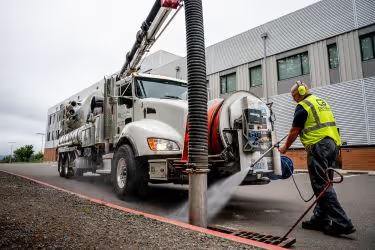
CatchAll Environmental specialized in storm drain cleaning in and around Seattle and the Puget Sound area. Not only will we clean everything from catch basins to detention vaults, but we also provide hands-on assistance with SWPPP management. So, is it time to call in the pros?
- Your documentation is incomplete or outdated. As we have already discussed, defensible documentation is a significant element of a stormwater inspection. However, there are consistent changes to what inspectors are looking for. Bringing in the pros ensures that your documentation is up-to-date, complete, and meets all requirements so that it will perform well during an audit.
- You want to get ahead of ongoing negative inspections. In the past, there was an infrastructure issue affecting overall functioning. If you notice repeated findings of system problems, failures, or outright violations, it is time to have a third party look at the system. Rather than spot-fixing what an inspector notices, have technicians review the stormwater infrastructure with an inspector's eye, without the risk of being cited.
- You need to save money. Emergency calls and maintenance undertaken due to regulatory scrutiny can get expensive. Shifting from being reactive to proactive saves you money. Regular scheduled maintenance and pre-storm readiness evaluations are much less expensive.
- Your property has older infrastructure. For properties with stormwater infrastructure that has been in place for years or even decades, it can be challenging to become familiar with the elements and their overall condition. Having a third party come in and map the system, verify all infrastructure elements, and conduct a professional inspection is critical.
By the way, another reason to bring in the pros is when you are not intimately familiar with the intricacies of stormwater infrastructure inspections. Find out today what a professional Seattle storm drain cleaning and maintenance appointment accomplishes.