

.png)
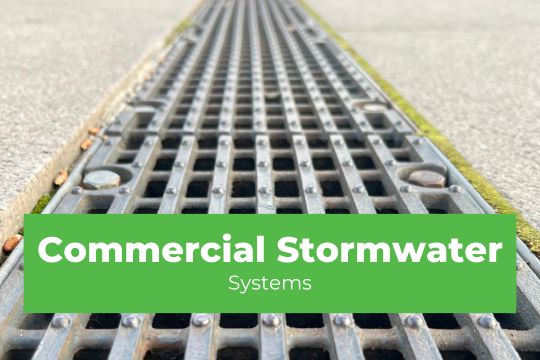
Much of a commercial stormwater system is underground or otherwise out of sight, so it can be easy to think of drainage as little more than catch basins connected to pipes. In practice, a privately owned stormwater system can include several structures that collect runoff, move it across the property, remove pollutants, control flow, store water, and discharge it downstream.
So, how does a commercial stormwater system work? Rainfall flows across paved and other hard surfaces before entering collection structures such as catch basins. From there, underground pipes carry the runoff through treatment and flow-control structures, depending on how the system is designed. Water may then be stored or managed in a detention vault, pond, or bioswale before leaving through an outfall.
The exact layout and sequence vary by property. Understanding the overall flow path, however, can help property managers recognize how individual structures work together and why a problem in one part of the system can affect another.
How Does a Commercial Stormwater System Work?

Commercial stormwater management doesn’t rely on one drain or device, but rather several connected structures. Each component performs a particular job as runoff moves through the property.
This sequence is sometimes described as a stormwater treatment train, meaning that collection, treatment, flow control, and other practices operate in succession. The specific components and their order depend on the property's engineered design and applicable requirements.
The Commercial Stormwater Flow Path
- Rain falls on developed surfaces. Roofs, parking lots, loading areas, drive aisles, and other impervious areas generate runoff.
- Runoff enters catch basins. Type 1 or Type 2 catch basins collect water and allow some sediment and debris to settle.
- Underground pipes convey the water. Conveyance pipes connect catch basins with treatment, storage, and discharge structures.
- Treatment structures help remove pollutants. Depending on the site, runoff may pass through a filtration system, oil-water separator, or another approved treatment structure.
- A control structure regulates flow. Flow-control components manage how quickly water moves through or leaves part of the system.
- Stormwater is stored, slowed, or treated. Depending on the property, this may involve a detention vault, detention or retention pond, bioswale, or another type of stormwater structure.
- Water exits through an outfall. The private system eventually releases the stormwater into the municipal storm system or an approved receiving water, such as a stream or other body of water.
Not every property contains all of these structures. Washington's Department of Ecology provides stormwater management manuals with guidance on areas such as flow control and runoff treatment, but the appropriate manual and requirements can depend on the municipality and project.
Step 1: Runoff Forms on Impervious Surfaces
The stormwater flow path begins when rain lands on the impervious surfaces of a commercial property. Impervious surfaces prevent or substantially limit water from soaking into the ground, such as parking lots, paved drive areas, sidewalks, and rooftops. As impervious areas increase, more rainfall tends to travel across the surface as runoff instead of infiltrating into the soil.
As stormwater flows across a property, it can pick up sediment, oil and grease, metals, and other pollutants. Equipment maintenance, material handling, and other industrial activities can be additional sources of pollutants when they take place in areas exposed to rain.
That is why commercial drainage systems may need to do more than move water away from paved areas. Depending on the property's design and requirements, they may also include structures intended to settle, separate, or filter pollutants before runoff reaches downstream infrastructure.
Step 2: Catch Basins Collect Runoff
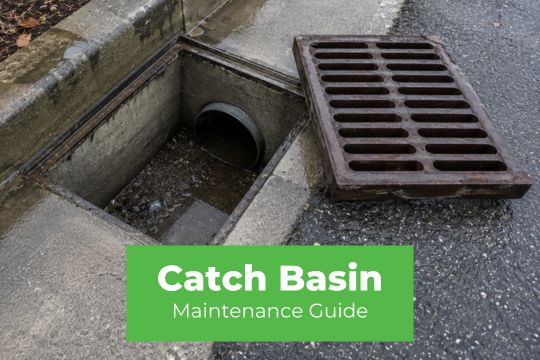
A catch basin is an underground collection structure that receives runoff and allows some sediment and debris to settle before the water moves farther into the system. Water generally enters through an inlet or grate. Beneath the outlet pipe is a lower area called a sump, where heavier material can settle instead of entering downstream pipes immediately.
Commercial properties in Washington may contain Type 1 or Type 2 catch basins. According to the Washington State Department of Transportation (WSDOT), Type 1 catch basins have limits on the pipe sizes they can accommodate and a maximum depth of five feet. Larger Type 2 catch basins are used when pipes exceed the allowable sizes for Type 1 structures or when the storm sewer system is deeper than five feet.
Once water reaches the outlet, it enters the underground conveyance pipes.
The sump has limited space, so as sediment builds up in the sump, less space is available for additional material, which may allow more of it to move downstream.
Catch Basin vs. Stormwater Separator
A catch basin and a stormwater separator serve different purposes.
A catch basin primarily collects runoff and provides space for some sediment and debris to settle. A stormwater separator provides more targeted treatment by separating sediment, debris, and other pollutants from the runoff.
Both can be part of the same stormwater system and may appear at different stages along the flow path. One is not necessarily better than the other because each is designed to perform a different role.
Step 3: Pipes Move Water Through the Site

After runoff leaves a catch basin, conveyance pipes move it between structures or toward treatment, detention, and discharge points.
A commercial property may have several catch basins connected to a larger underground network. These pipes form the links between the visible and less visible parts of the system, allowing water collected in parking lots or other developed areas to reach downstream structures.
Because this infrastructure is underground, surface symptoms do not always reveal where a problem originates. Sediment, debris, root intrusion, structural deterioration, displaced pipe sections, or collapse can restrict water movement. When conveyance is impaired, issues like slow drainage, standing water, and recurring backups become more noticeable during heavier rainfall.
Commercial stormwater pipe sizing is also site-specific. Engineers consider anticipated flows, the system layout, and applicable design standards rather than using one standard pipe diameter for every commercial property. Washington's stormwater manuals provide regional guidance for hydrologic analysis and flow-control design, while local jurisdictions may have additional requirements.
For property managers, the more practical question is usually not what size a pipe should be, but whether the existing underground network is clear, intact, and able to convey runoff as designed.
Step 4: Treatment Structures Remove Pollutants
Some commercial stormwater systems include water-quality treatment structures between collection and final discharge.
The type of treatment depends on the site's design, land use, pollutants of concern, and applicable requirements. A treatment stage may target sediment, oil, metals, or other pollutants rather than simply moving water downstream.
One example is a stormwater filtration system. In filtration systems, runoff passes through treatment media or another treatment mechanism designed to capture or adsorb targeted pollutants.
The StormFilter®, for example, uses media-filled cartridges where particulates are trapped, and certain pollutants, depending on the media option used, can be absorbed before the treated water exits the cartridges.
An oil-water separator serves a different purpose. These structures separate oils or petroleum products from runoff. They may be especially useful on sites with fueling, vehicle traffic, equipment use, or maintenance activities, since these can be potential sources of these pollutants.
But that does not mean every commercial or industrial property requires one. The appropriate treatment depends on the site's design and activities.
What Is a Stormwater Treatment Train?
A stormwater treatment train is a series of treatment components that work in sequence.
Instead of one structure performing every function, the system can use different stages for different purposes. A catch basin may first settle heavier sediment. Runoff may then move through filtration or separation before reaching flow-control or storage structures.
This is also why keeping upstream structures maintained matters. For example, if too much sediment gets past a catch basin, it can put more strain on treatment structures farther down the system.
There is no single treatment train that applies to every commercial property. It is determined by the engineered site design and applicable stormwater requirements.
Step 5: Control Structures Regulate Flow
Moving stormwater off a property as quickly as possible is not always the goal. Commercial systems may also need to regulate how fast water moves downstream.
A control structure is a component that regulates flow into, through, or out of part of the stormwater system. Depending on the design, flow-control openings or other features can limit the rate at which stored runoff is released.
This becomes especially important when the system includes detention. Rather than allowing a large volume of runoff to leave immediately, the system can temporarily hold water and release it more gradually.
The control structure works together with storage facilities. If the structure becomes restricted by sediment or debris, or if a component is damaged, the effect may be visible elsewhere. Water may remain in storage longer than intended, upstream levels may rise, or drainage performance may change.
Specific control-structure designs and discharge rates vary by project and jurisdiction, so approved site plans and qualified evaluations must be followed.
Step 6: Where Is Stormwater Stored or Managed?
After treatment and flow regulation, stormwater may be directed to a vault, pond, bioswale, or another best management practice (BMP). A BMP is a physical measure, practice, or procedure used to manage stormwater or reduce pollution.
The structure used depends on the property's available space, engineered design, drainage needs, and applicable requirements.
Stormwater Detention Vault
A stormwater detention vault is an underground structure that temporarily stores runoff and controls how quickly it leaves the property.
This type of underground stormwater detention can provide storage below developed portions of a site where aboveground space is limited. Detention does not usually mean keeping all of the stormwater permanently. Instead, water is held temporarily and released at a controlled rate.
The amount of usable storage matters. Sediment accumulation can take up space within the vault, while the condition of inlets, outlets, and associated control structures can affect how water enters and leaves.
Detention and Retention Ponds
Ponds can also be used for stormwater management, but detention and retention are not interchangeable terms.
Detention ponds temporarily store stormwater and release it downstream at a controlled rate. Infiltration ponds temporarily store runoff while allowing it to soak into the soil. Other pond types may be designed for different combinations of storage, flow control, and treatment. Some stormwater ponds, such as retention ponds, are instead designed to maintain a permanent pool of water.
Site plans and maintenance documents can help clarify whether a pond is intended primarily for flow control, treatment, storage, or a combination of purposes.
For commercial runoff retention ponds or detention facilities, the important point is to understand the facility's intended function rather than relying only on what it looks like from the surface.
Bioswales and Other BMPs

A bioswale is a vegetated stormwater structure designed to slow runoff, capture sediment, and help capture pollutants.
Unlike an underground vault, a bioswale manages water through a surface feature. Depending on the design, it may help treat runoff, control its flow, or both.
Other approved BMPs may also appear within a commercial stormwater system. The important distinction is that these features are part of a site-specific system. A property with a detention vault may not have a pond, while another property may rely on several different management practices working together.
Step 7: Where Does the Stormwater Go Next?
Eventually, stormwater reaches an outfall, the point where it exits the onsite system or property.
Depending on the site's approved design, runoff may enter a municipal stormwater system or discharge to another approved receiving water. The municipal infrastructure downstream is separate from the privately owned stormwater structures located on the commercial property.
That distinction matters for maintenance responsibilities. A property owner or manager may be responsible for maintaining the onsite system even though the water eventually enters public infrastructure.
Keeping upstream structures functional can also help limit the amount of sediment, debris, and pollutants carried beyond the property. The U.S. Environmental Protection Agency (EPA) notes that runoff can transport pollutants from developed and industrial areas into rivers, lakes, coastal waters, and storm sewer systems.
For Washington properties, responsible maintenance of private stormwater infrastructure supports both site performance and the broader goal of reducing polluted runoff reaching downstream waterways.
Why Does the Whole System Need Maintenance?
A stormwater system works as a network. Maintenance problems rarely stay neatly confined to one structure.
For example:
- A sediment-filled catch basin can lose available capacity. Sediment and debris may then move farther into downstream pipes or treatment structures.
- A restricted conveyance pipe can interrupt flow between components. This may result in standing water or recurring drainage problems upstream.
- Excess sediment can reduce usable storage. Material accumulating in a vault or pond occupies space that would otherwise be available for stormwater.
- A restricted control structure can affect detention performance. Water may not leave the facility at the intended rate.
- Treatment structures may become less effective without proper maintenance. Their maintenance needs depend on the system type and design.
These relationships are also why many commercial stormwater system challenges are easier to understand when the property's complete flow path is known.
A stormwater system inspection can help identify which structures are onsite, where underground components are located, their current condition, and what maintenance may be appropriate. System mapping can be especially useful when old records are incomplete, or property managers have taken over a property without a clear picture of its underground infrastructure.
What Maintenance Requirements Apply to Your Property?
Property owners and managers should confirm the requirements that apply to their specific property, as schedules and procedures can vary throughout Washington. Inspection, maintenance, documentation, and reporting obligations may differ by jurisdiction, property type, system design, facility operations, and permit status.
Commercial stormwater maintenance requirements should also be evaluated site by site. Washington Department of Ecology notes that different stormwater manuals and implementation requirements may apply depending on the municipality or permit administrator.
Keeping the Whole Stormwater System Working
A commercial stormwater system is best understood as a connected path: runoff is collected, conveyed, treated where needed, regulated, stored or otherwise managed, and ultimately discharged through an approved outlet. The exact combination of structures varies, but each component affects how well the larger system performs.
Knowing what structures are on a property and how they connect can make inspection and maintenance planning more practical. If the system layout is unclear, reviewing existing plans or having the private stormwater infrastructure inspected and mapped can help establish a clearer picture of what needs attention.
Underground structures can be particularly difficult to evaluate from the surface. For properties that contain detention or treatment vaults, underground stormwater vault maintenance is one option for evaluating and maintaining that part of the system as part of a broader preventive maintenance approach.