

.png)
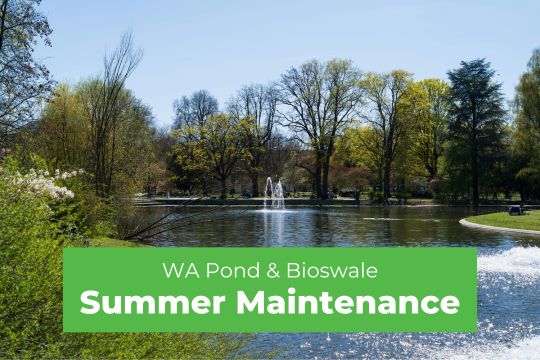
To manage stormwater runoff effectively, WA property owners and managers know to have a broad range of infrastructure solutions in place. Two common examples are stormwater ponds and bioswales. What are the summer maintenance requirements for stormwater ponds and bioswales in Washington? How can you ensure that these elements of your stormwater management infrastructure are functioning properly? Let's talk about it.
Take Advantage of the Dry Summer Months for Pond and Bioswale Inspections, Repairs, and Overall Vegetation Management
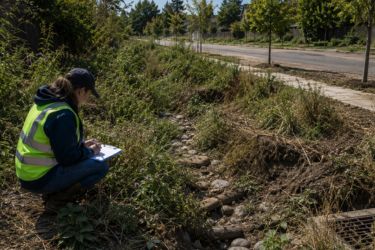
After the wetter months have passed, summer provides an ideal opportunity to inspect ponds and bioswales and address maintenance needs before the rainy season returns. Drier conditions make it easier to identify sediment buildup, debris, erosion, and vegetation overgrowth, while also providing better access for routine maintenance, repairs, and vegetation management.
Understanding Summer Maintenance Requirements
Check your stormwater manual, permits, or Washington State Department of Ecology Stormwater Management manuals. There are specific Washington pond and bioswale summer maintenance requirements that must be completed during the drier months.
- Inspections. Experienced technicians will gauge sediment buildup, identify blocked inlets or outlets, note any erosion, and evaluate vegetation damage or dieback.
- Sediment removal. If sediment accumulation begins to reduce the pond's designed storage capacity or reaches maintenance thresholds identified in the facility's design, removal may be necessary.
- Vegetation maintenance. Overgrowth blocks water flow. Die-back results in eroded areas. Additionally, it leaves room for invasive weeds that overtake the desired native vegetation. Check that the bioswale and pond design and plant selection have not been changed.
During summer inspections, address any inlet or outlet restrictions, erosion concerns, or drainage issues that could affect system performance. Drier conditions also make it easier to complete minor grading, slope stabilization, and bank restoration work when needed.
Understanding Washington Storm Pond Native Landscape Requirements
Remember that ponds and bioswales are functional stormwater facilities, not purely ornamental landscape features. While you can most certainly make them aesthetically appealing, their primary purpose is functionality. To this end, Washington stormwater systems prioritize or require native and site-appropriate vegetation as specified in project plans and local stormwater standards. Appropriately selected native plants can:
- Do well in the local climate, which helps prevent dieback and preserve slope stability.
- Minimize irrigation needs in the dry season.
- Provide habitat for local wildlife.
However, just because a plant is native does not mean that it is suited for your location. Before you invest in native grasses, shrubs, ground cover, and sedges, learn about medium soil moisture, sun exposure, and slope. Select native plants that will thrive in the conditions your location provides.
Why Proactive Biofiltration Swale Summer Maintenance Matters
Bioswales help filter sediment, pollutants, and runoff before they reach local waterways. Regular maintenance is essential to preserve flow capacity, support pollutant removal, and keep bioswales functioning as designed.
Summer Swale Vegetation Maintenance
Schedule bioswale inspections and maintenance during Washington's drier summer months.
- Remove invasive plants; these are likely grasses and weeds.
- Uproot plants that block flow paths. Alternatively, you might cut them back. If plants are trimmed back, monitor regrowth and repeat trimming as needed.
- Cut back overgrown plants. Pay special attention to woody plants. Address woody vegetation early before removal or trimming becomes more difficult.
- Replant native grasses or reseed vegetation that may have died off.
- One of the most important maintenance tips for stormwater systems is to check for soil compaction that can lead to uneven vegetation growth patterns. If left in place, it could adversely affect the biofiltration.
Partnering with stormwater infrastructure maintenance experts enables cleaning biofiltration swales in accordance with WA requirements. Typical cleaning involves sediment and silt removal, trash collection and removal, and inlet and outlet cleaning. In addition to handling this maintenance, these technicians will conduct an overall routine inspection and document any steps taken to clean, maintain, or repair the infrastructure, providing documentation that supports ongoing compliance efforts.
Reactive Storm and Bioswale Remediation
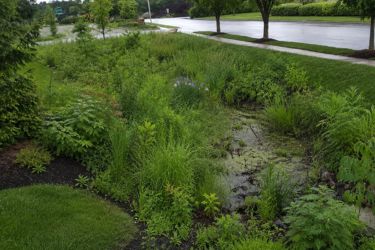
If maintenance has been deferred and a pond or bioswale becomes clogged, overgrown, eroded, or otherwise impaired, remediation may be necessary to restore proper function and maintain compliance. Common warning signs include poor drainage, sediment blockages, and visible structural deterioration.
Typical remediation services include sediment excavation, bank stabilization, outlet repairs, and replanting biofiltration vegetation. Schedule remediation appointments in the summer, when access to ponds and bioswales is ideal, or as soon as possible. (Additionally, if vegetation replacement is necessary, the plants will have time to establish themselves before the rainy season returns.)
Compliance Considerations
Stormwater manuals, maintenance agreements, and permit requirements establish maintenance expectations for ponds and bioswales. Deferred maintenance can lead to inspection deficiencies, reduced system performance, and costly corrective actions. Regular inspections and timely repairs help support compliance while protecting nearby waterways from untreated runoff.
Partner With an Experienced Stormwater System Inspection Company
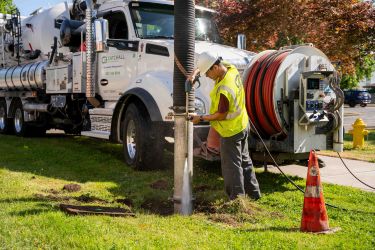
Working with experienced stormwater professionals can help ensure maintenance activities are completed correctly and in accordance with applicable requirements. Instead, work with experienced technicians who understand how to identify and address inlet/outlet blockages, pond sediment accumulation, and storage capacity issues.
Additionally, these experts can help identify maintenance needs and support compliance across the rest of your stormwater management infrastructure. They do so with routine inspections as well as any needed underground stormwater vault maintenance, pipe jetting, and stormwater pollution prevention plan (SWPPP) management.
Schedule a stormwater inspection today to help keep your ponds, bioswales, and related infrastructure operating efficiently and in compliance.